


Scaling Mobile Apps Globally With Cloud-Native Infrastructure
Key Takeaways
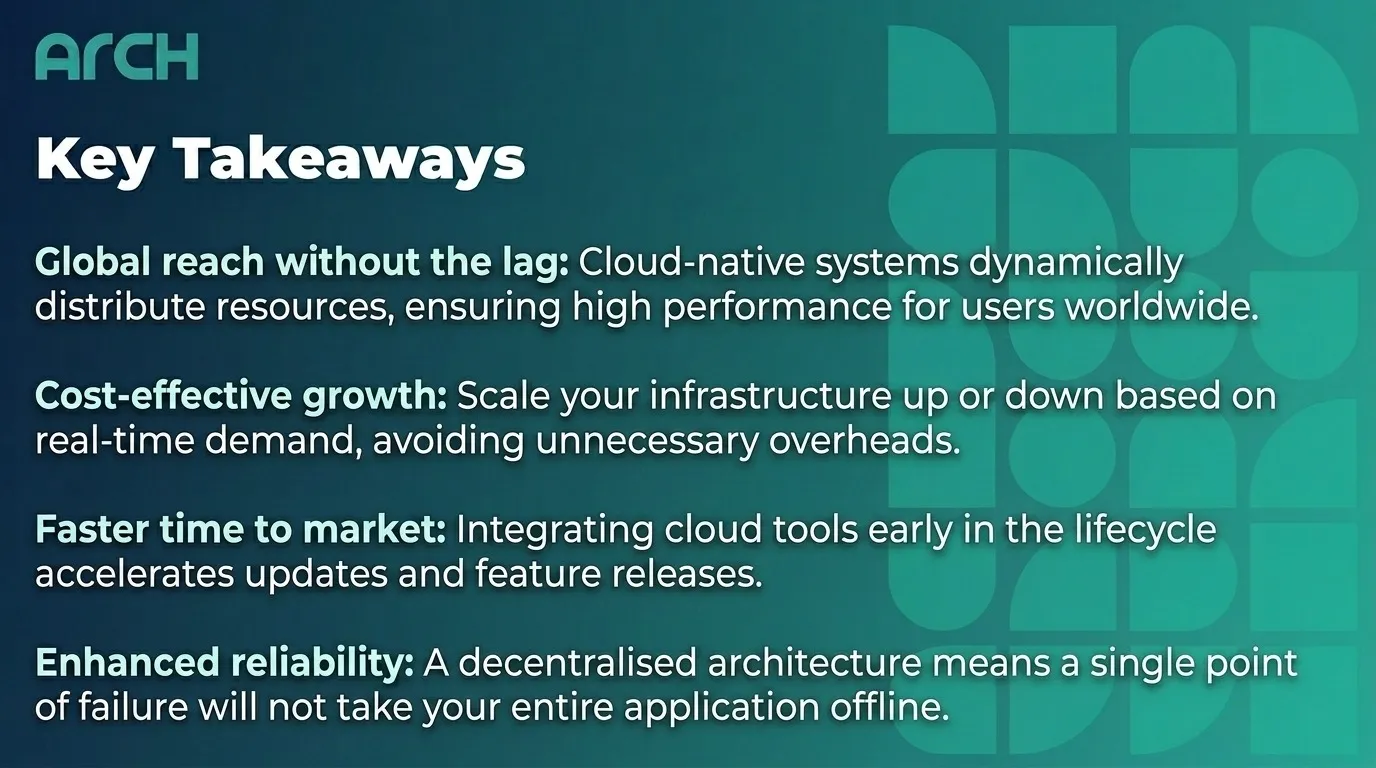
- Global reach without the lag: Cloud-native systems dynamically distribute resources, ensuring high performance for users worldwide.
- Cost-effective growth: Scale your infrastructure up or down based on real-time demand, avoiding unnecessary overheads.
- Faster time to market: Integrating cloud tools early in the lifecycle accelerates updates and feature releases.
- Enhanced reliability: A decentralised architecture means a single point of failure will not take your entire application offline.
Setting the Stage for App Scalability
Building a mobile application that looks great is only half the battle in today’s competitive digital landscape. To truly move the needle, your application must perform flawlessly under pressure, regardless of where your users are located. This is where cloud-native infrastructure becomes a critical component of the development lifecycle.
Rather than relying on rigid, traditional servers, a cloud-native approach gives your application the flexibility to grow alongside your user base. It removes the technical bottlenecks that often hinder performance, allowing your team to focus on creating outstanding user experiences. When done correctly, this collaborative strategy is proven to drive growth and keep your audience engaged.
By embracing this modern framework from day one, you ensure your application is built for long-term success. Let us explore how integrating these cloud-first principles can transform your project and safeguard its global performance.
Breaking Down the Cloud-Native Advantage
To remain approachable and contactable to a global audience, modern businesses need systems that never sleep. Traditional development often treats server infrastructure as an afterthought, leading to clunky updates and inevitable crashes during traffic spikes. A cloud-native strategy flips this script entirely by prioritising resilience.
Instead of building one massive, unyielding programme, developers create applications using smaller, independent pieces. These modular components work together seamlessly but can be updated or fixed individually without disrupting the user experience. This means fewer maintenance windows and an application that feels incredibly responsive to your customers.
Ultimately, this approach gives you the confidence to launch ambitious marketing campaigns or feature drops. You know your infrastructure can handle the influx of new users, ensuring every interaction helps drive growth rather than causing frustration.
Partnering for Seamless Integration
Transitioning to a cloud-first development lifecycle is a highly collaborative process that requires the right expertise. It is not just about choosing the correct software; it is about adopting a mindset that champions agility and long-term performance. Working with experienced partners helps you navigate this transition smoothly and avoid costly missteps.
For businesses looking to make a substantial impact, collaborating with a top-tier web design and mobile app development company ensures that cloud integration is handled seamlessly from the planning phase. They will help you map out an infrastructure that aligns perfectly with your commercial objectives.
This collaborative effort ensures that the underlying technology remains invisible to the end user. All they experience is a fast, reliable, and beautifully designed application that solves their problems and keeps them coming back.
Optimising the Lifecycle for Real Impact
Integrating cloud services should happen at the very beginning of the development lifecycle, not just before launch. By setting up automated testing and continuous delivery pipelines early, your team can analyse user behaviour and roll out updates rapidly. This agility is what truly moves the needle in a crowded, fast-paced marketplace.
Furthermore, this modern infrastructure allows for better data collection and resource management. You can quickly see which features are drawing the most engagement and allocate your cloud resources accordingly to optimise performance. It is a highly practical way to ensure your budget is being spent efficiently.
When you prioritise scalability from day one, you build an application that is ready for whatever happens next. It empowers your business to expand into new territories with confidence, knowing your digital presence is built on a rock-solid foundation.
Conclusion
Integrating cloud-native infrastructure into your mobile app development is no longer just a technical upgrade; it is a fundamental business strategy. It provides the robust, flexible foundation necessary to deliver exceptional user experiences on a global scale. By adopting this approach, you eliminate the technical barriers that stunt expansion and frustrate your audience.
With the right collaborative approach and a focus on measurable outcomes, your application will be perfectly positioned to succeed. Embrace the flexibility of the cloud, and watch your digital product drive growth for your business in ways traditional infrastructure simply cannot match.
Frequently Asked Questions
What does cloud-native actually mean? It refers to building and running applications designed specifically to thrive in modern cloud environments. Rather than relying on physical servers, these applications use flexible, modular cloud resources to ensure reliability and speed.
How does this approach save money in the long run? Cloud-native infrastructure allows you to pay only for the computing power you actually use. During quiet periods, the system scales down automatically, preventing you from paying for idle server space while still being ready for sudden traffic spikes.
Can existing apps be moved to a cloud-native model? Yes, although it requires a strategic migration process. Developers can gradually break down a traditional application into modular cloud components, improving performance incrementally without needing to rebuild the entire programme from scratch.
Sources
- The Business Value of Cloud-Native Architecture
- How Modular Infrastructure Reduces Downtime
- Case Study: Scaling Mobile Apps for Global Audiences
- The Impact of App Load Times on User Retention